Have you ever walked from a freezing living room into a bedroom that feels like a sauna? Uneven temperatures frustrate homeowners everywhere and usually point to a single mechanical culprit hidden out of sight. Learning how to increase airflow in HVAC system configurations is the first step toward restoring the balance of your indoor environment. At Vecchione Heating and Cooling, LLC, we specialize in identifying these invisible bottlenecks to restore your peace of mind.
Learning how to improve air movement in your home saves money while drastically improving your daily indoor comfort. In this guide, we will explore highly practical steps to optimize your equipment and permanently fix those frustrating hot and cold spots. By focusing on improving airflow, you can extend the life of your HVAC unit and provide a consistent temperature throughout every room.
The Hidden Costs of Poor HVAC Airflow
Restricted circulation creates a destructive domino effect throughout your entire residential climate control system over time. Your blower motor strains against high static pressure when air cannot move freely through the ventilation pathways. This constant mechanical stress significantly reduces the overall lifespan of your expensive heating and cooling equipment. To increase air volume, you must first identify where the resistance is highest within your air conditioning network.
Airflow vs. System Health
| Issue | Impact on System | Financial Consequence |
| Low Air Volume | Blower motor overheating | Premature motor replacement |
| High Static Pressure | Duct leakage increases | Higher monthly utility bills |
| Frozen Coils | Compressor slugging | Total system failure |
| Poor Humidity Control | Mold growth in ducts | Expensive remediation costs |
The system needs sufficient air flow to pull moisture out of your living spaces effectively during summer months. Excess indoor humidity makes the environment feel sticky and encourages harmful mold growth inside your dark ductwork. When you improve airflow, you are also actively managing the moisture levels that can lead to structural damage and health concerns.
Practical Steps: How to Increase Airflow in HVAC System
The most common reason for poor performance is the presence of dirty air filters within the return plenum. An air filter is designed to catch dust and debris, but it eventually becomes a wall that blocks movement. When you have a clogged air filter, the blower motor must work twice as hard to pull air through. This leads to dirty air bypassing the filter and coating the internal components of your air conditioner.
The Filter Checklist
- Check monthly: Inspect filters every 30 days during peak summer and winter months.
- MERV Balance: Use a filter that catches debris without being so restrictive that it chokes the motor.
- Clear the Return: Keep furniture, curtains, and dust away from return air grilles.
- Vacuum Grates: Regularly clean the dust off your intake vents to prevent “starving” the fan.
If you find dirty filters, replace them immediately with a high-quality pleated version that matches your system’s specifications. Always balance the need for filtration with the need for improved airflow to maintain a healthy system balance. If things go wrong after hours, you may need an emergency HVAC repair in Richboro to get your system back online.
Optimizing Central AC and Outdoor Units
Your air conditioner relies on a clean outdoor condenser unit to dissipate heat effectively from your home. If the outdoor fins are clogged with grass clippings or leaves, the HVAC performance will drop significantly. You can use a gentle garden hose to rinse the debris away and provide the unit with plenty of breathing room. Maintaining at least two feet of clearance around the HVAC unit is essential for proper heat exchange and efficiency.
Inside the house, you should verify that all supply registers are fully open in every room of the building. Some people believe closing vents in unused rooms saves money, but this actually increases pressure and causes duct leakage. The central AC is designed to move a specific volume of air, and closing vents disrupts that calibrated internal balance.
Addressing Duct Leakage and Air Duct Issues
The air ducts in your home act as the circulatory system, and any breach can lead to massive energy loss. Duct leakage is a silent thief that pulls conditioned air into unconditioned spaces like your attic or basement. Sealing these gaps with mastic or foil tape is a highly effective way to improve airflow to the furthest rooms.
In many modern homes, flex duct is used because it is easy to install, but it is prone to kinking. A single sharp bend in a flex duct can reduce the air volume to a room by more than 50%. You should inspect your crawlspace to verify that no ducts have been crushed or disconnected by pests or other contractors. Providing a straight path for the air to travel is one of the best ways to increase air delivery to your bedrooms.
Improving Airflow in Mini Split and Heat Pump Systems
A heat pump is a versatile piece of equipment, but it is very sensitive to changes in air volume. Because heat pumps operate at lower discharge temperatures than gas furnaces, they require higher volumes of air to feel warm. If the airflow is restricted, the split heat process becomes inefficient, and the backup electric heat may kick in.
For those using a mini split, the indoor head unit must be kept free of dust and biological growth. The small blower wheels inside a mini split AC can become weighed down by debris, which drastically reduces their output. Regular cleaning of the internal “squirrel cage” fan will improve airflow and allow the unit to operate quietly. This is especially important for mini split heat applications where the unit runs for extended periods during the winter.
Professional Diagnostics and Static Pressure
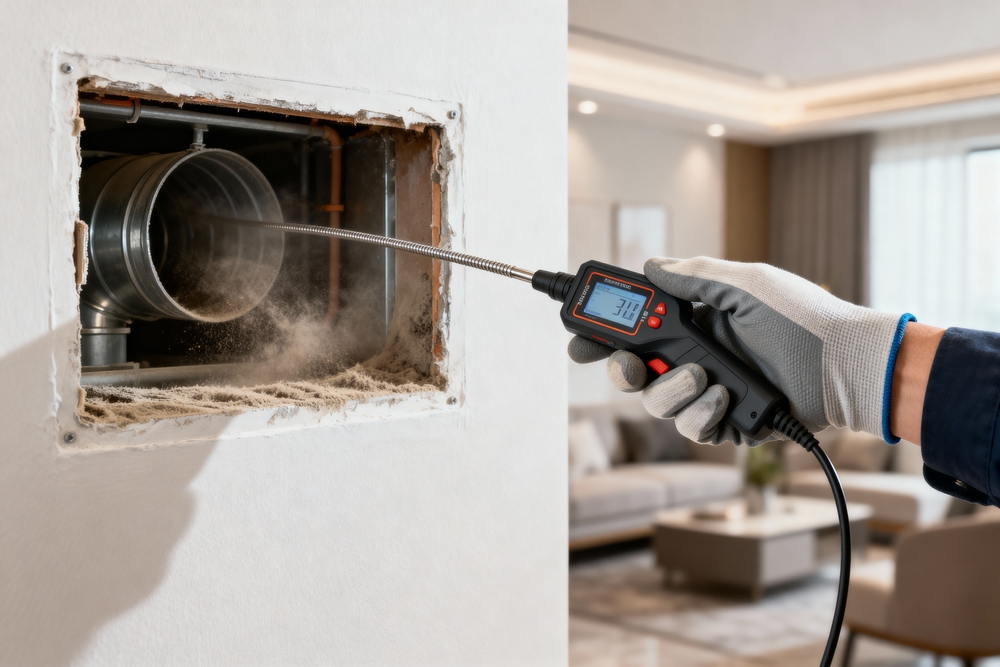
Sometimes, the issues with your HVAC airflow are too complex for a simple DIY fix and require expert tools. You should schedule service with a reputable company like Vecchione Heating and Cooling, LLC that offers advanced static pressure testing. A technician can use a manometer to measure exactly where the pressure is building up within your ventilation system.
Another advanced diagnostic tool is the blower door test. Fixing these leaks is often the most impactful way to improve air quality and system efficiency simultaneously. If you are looking for top-tier HVAC services in Yardley, a professional evaluation can uncover these hidden energy drains.
The Impact of Furniture and Smart Tech
Many homeowners inadvertently block their supply and return vents with heavy furniture, curtains, or thick area rugs. This restriction forces the system to work harder, leading to uneven temperatures and increased wear on the internal components. Maintaining a clear path of at least 18 inches around every vent is a simple way to improve circulation.
Modern smart thermostats offer more than just temperature control; they can provide alerts when it is time to change filters. Some advanced models can even monitor system run times to predict when maintenance might be required to prevent airflow issues.
Conclusion
Improving airflow is a multi-step process that involves both simple maintenance and professional oversight. From changing your air filter to sealing leaky ducts, every small action contributes to a more efficient home. Don’t let dirty air or restricted vents ruin your comfort or drain your bank account through high utility bills. Take control of your HVAC performance today and enjoy a perfectly balanced home all year round.
If you have a quick question about your specific setup, it is often best to consult with a professional at Vecchione Heating and Cooling, LLC. Are you tired of dealing with hot and cold spots in your home? Contact us today to schedule an airflow audit and restore your home’s comfort!