

You have decided to invest in a new heating and cooling system for your home. This significant upgrade promises better comfort and lower energy bills for years to come. Now you likely want to know how long the installation crew will occupy your space. This is a common question we hear at Vecchione Heating and Cooling, LLC, as most homeowners want a clear timeline so they can plan their schedules around the work.
A standard HVAC replacement usually takes between one and three days to complete from start to finish. However, this timeframe can shift based on several specific variables related to your property. Simple replacements where the new unit matches the old one generally fall on the shorter end of that spectrum. Projects requiring extensive ductwork repair or a switch to a different fuel source will naturally take longer. Understanding these factors helps you manage expectations and prepare your home for the upcoming work.
Primary Factors That Influence Installation Speed
Every home presents a distinct set of challenges that impacts the speed of an HVAC installation. The physical location of your existing unit plays a massive role in how quickly technicians can work. Units located in easily accessible basements allow for faster labor than those squeezed into tight attics or crawlspaces. When the team from Vecchione Heating and Cooling, LLC arrives, their first goal is to establish a workspace that allows for safe and efficient movement.
The condition of your current infrastructure is another critical variable that contractors must assess before giving a final time estimate. If your electrical panel cannot handle the amperage of a modern high-efficiency system, an electrician must upgrade it first. These additional electrical tasks can add anywhere from half a day to a full day to the project.
Weather conditions also dictate the pace of work, especially for the outdoor portion of the installation. Technicians cannot safely handle refrigerants or weld copper lines during heavy rain or lightning storms. Severe heat can also slow down crews working in unconditioned attics, requiring them to take frequent safety breaks. This is particularly relevant for those seeking HVAC installation in Fairless Hills, where seasonal humidity and summer storms can occasionally interrupt the outdoor phase of the project.
Estimated Timelines by System Type
The type of equipment you choose directly dictates the labor hours required for proper installation. A direct swap of a simple air conditioner is much faster than installing a complex geothermal system. Here is a breakdown of what you can generally expect for different equipment configurations.
Standard Split System Replacement
Replacing a standard split system involving an outdoor condenser and an indoor air handler typically takes one day. Two experienced technicians can usually remove the old equipment and set the new units within eight to ten hours. If the copper refrigerant lines are in good shape and can be reused, this saves significant time.
Full System with Furnace
Installing a complete heating and cooling package usually spans one to two days. This involves replacing the air conditioner outside and the furnace inside, along with the evaporator coil. The crew must connect gas lines, flue pipes, and electrical wiring for both heating and cooling components.
Ductless Mini-Split Systems
A single-zone mini-split system is often the fastest installation, sometimes taking as little as four to six hours. However, multi-zone systems that cover the entire house are far more labor-intensive to set up correctly. Running refrigerant lines through walls to multiple indoor heads can stretch a multi-zone project to three or four days. If you are looking for localized climate control, our HVAC services in Yardley often include these versatile systems for older homes without existing ducting.
New Ductwork Installation
If your project involves replacing or installing brand new ductwork, you must adjust your schedule expectations significantly. Fabricating and hanging sheet metal or flexible ducts throughout a home is a major construction task. This process typically adds two to four days on top of the equipment installation time.
Pro Tip: Ask your contractor if they fabricate their own ductwork or outsource it. In-house fabrication shops often reduce delays significantly since they don’t have to wait on third-party suppliers.
The Installation Process Step-by-Step
Knowing the specific steps involved helps clarify how long it takes to install an HVAC system in your specific home. The process follows a logical sequence that technicians must adhere to for safety and performance reasons. Rushing any of these steps can lead to poor efficiency or premature system failure. At Vecchione Heating and Cooling, LLC, we follow a strict protocol to verify that every connection is secure before the system is powered on.
The crew generally arrives early in the morning to maximize daylight hours for the outdoor work. They will start by protecting your floors with drop cloths and verifying the equipment matches the order. Once the site is prepped, the physical labor begins in earnest.
The Installation Workflow
- Decommission and Removal: Technicians shut off power and gas, then recover existing refrigerant from the old unit. They physically remove the old equipment and dispose of it according to EPA regulations.
- Pro Tip: Clear a wide path to the unit so the crew can carry heavy equipment easily.
- Site Modification and Positioning: The crew prepares the pad for the outdoor unit and modifies the plenum for the indoor unit. They position the new equipment and level it precisely to prevent future drainage issues.
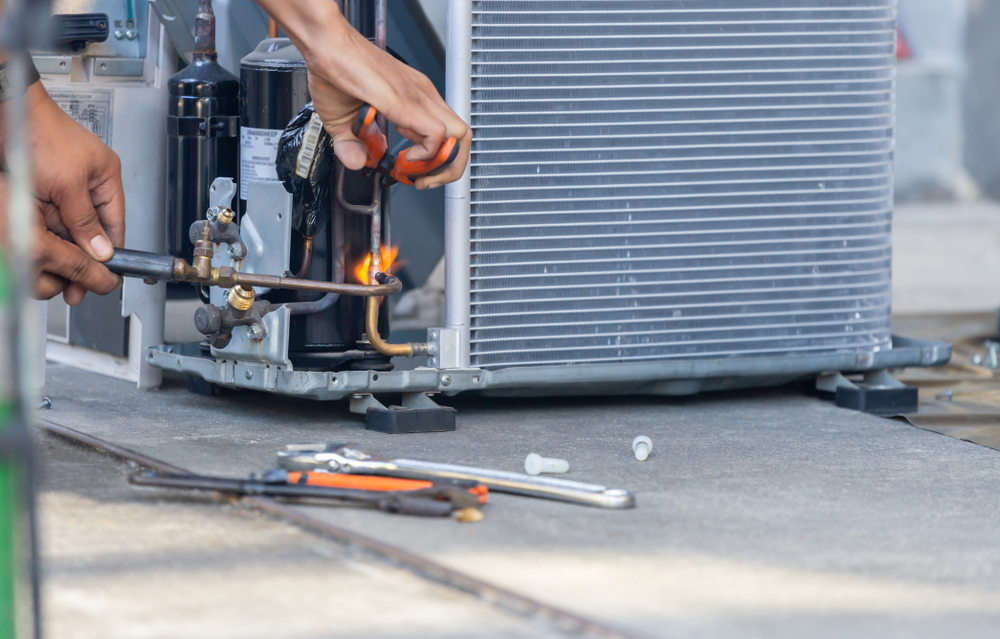
- Connections and Commissioning: Technicians braze copper lines, connect high-voltage wiring, and install the thermostat. They then vacuum the lines to remove moisture before charging the system and testing performance.
Common Reasons for Unexpected Delays
Even the best-planned installations can encounter hurdles that push the completion date back. Unforeseen structural issues often reveal themselves only after the old unit is removed. For example, technicians might discover rotted flooring under a furnace or mold inside the return plenum. These issues must be addressed to provide a stable foundation for your new investment.
Permitting and inspections are another frequent source of schedule disruption in many municipalities. Some local codes require a rough-in inspection before walls are closed or before the final startup can occur. Waiting for a city inspector to arrive can pause work for an entire day or more. Vecchione Heating and Cooling, LLC works closely with local authorities to coordinate these visits, but the inspector’s schedule is ultimately outside of a contractor’s control.
Supply chain issues can also affect the timeline if specific parts are missing from the shipment. While contractors try to verify inventory beforehand, a missing specialized valve or circuit board can halt progress. It is smart to ask your contractor if they have all critical components in hand before they start demolition.
How to Prepare Your Home
You can help speed up the process by preparing your home before the crew arrives. Start by clearing all furniture and clutter from the areas around the indoor and outdoor units. Technicians need at least three feet of clearance to work safely and efficiently with heavy tools.
Secure your pets in a separate room or a neighbor’s house for the duration of the project. Doors will remain open frequently as workers carry equipment in and out, increasing the risk of pets escaping. Keeping animals away also protects them from loud noises and potential hazards like sharp metal scraps.
Review the access route the installers will use to move the furnace or air handler into place. If they need to carry a heavy unit down a narrow flight of stairs, remove wall hangings to prevent damage. Taking these small steps allows the pros to focus immediately on the technical work rather than moving obstacles.
Conclusion
Most homeowners can expect their new HVAC system to be up and running within one to three days. While simple changeouts are quick, complex jobs involving ductwork or relocation will naturally require more time. The key is to communicate clearly with your contractor about the scope of work before the project begins. Remember that unforeseen issues like electrical upgrades or structural repairs can extend the timeline. By preparing your home and understanding the process, you help facilitate a smoother and faster installation. Soon enough, you will be enjoying the consistent comfort and efficiency of your new system. If you are ready to upgrade your home comfort, contact us today for a consultation.